Why Do Dobermans Have Their Tails Docked?
(No, it’s not just for the “mean mug” look)
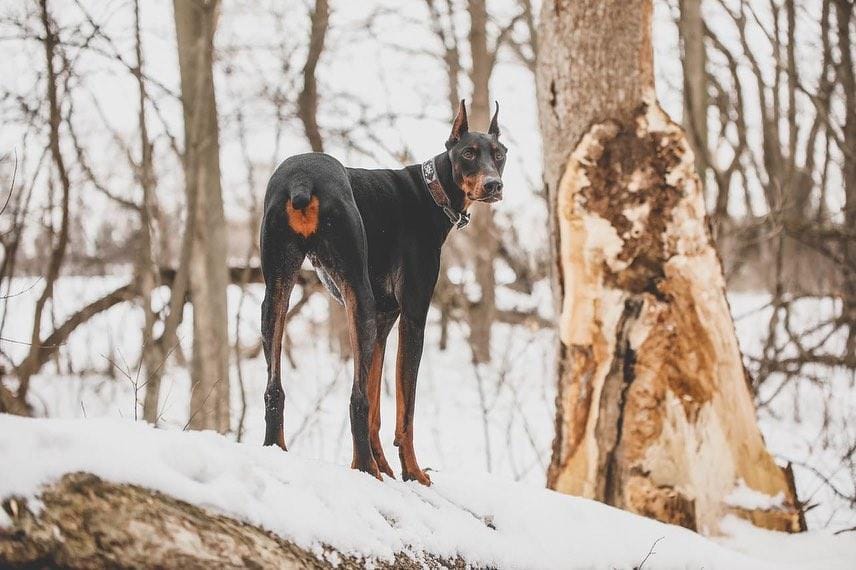
Let’s address the elephant in the room — or rather, the missing tail.
If you’ve ever looked at a Doberman and thought,
“Wow, very regal… but where did the tail go?”
you’re not alone.
Tail docking is one of the most talked-about (and misunderstood) topics in the Doberman world. Some assume it’s purely cosmetic. Others think it’s done for convenience. The truth? It’s a mix of history, health, safety, and yes — a little practicality.
Let’s break it down without the drama.
🐾 When Is a Doberman’s Tail Docked?
Doberman tails are typically docked between 1–5 days old.
At this age:
The nervous system is still very underdeveloped
Bones are soft cartilage
Healing is rapid
Stress and long-term discomfort are minimal when done properly
This timing is crucial — docking is not something done to older puppies or adult dogs.
✂️ How Is Tail Docking Done?
There are two commonly used methods:
1. Cutting (surgical removal)
2. Banding (using a tight band that cuts off circulation)
Banding is often preferred because:
It causes significantly less bleeding
It avoids an open wound
The tail naturally falls off after circulation stops
Many breeders and vets consider it less traumatic overall
Regardless of method, when done correctly at the appropriate age, puppies recover quickly and go on living their best tail-free lives.
🩸 It’s Not Just About Looks — Health Matters
Here’s a big one that doesn’t get talked about enough:
Dobermans have arteries that run all the way to the tip of their tail.
That means tail injuries aren’t just annoying — they can be dangerous.
There have been real stories shared over the years of Dobermans:
Catching their tail on barbed wire
Smacking it open on fences, crates, or doors
Bleeding heavily before owners even realized something was wrong
And for Dobermans that may carry von Willebrand’s disease (a bleeding disorder found in the breed), a tail injury can be far more serious — even life-threatening.
A docked tail removes that risk entirely.
🐕 “Happy Tail” Is a Real Thing
Dobermans are enthusiastic communicators.
Their whole body gets involved — wiggles, spins, hops… and yes, tail action.
“Happy tail” happens when a dog repeatedly smacks the tip of their tail against hard surfaces. Over time, this can cause:
Split skin
Chronic wounds
Repeated bleeding
Infections that won’t heal
Is this the main reason tails are docked?
No — but it is a real problem, and one many owners don’t think about until they’re dealing with blood on the walls.
🛡️ Built for Work, Not Decoration
Dobermans weren’t created as couch ornaments (though they’re excellent at that too).
They were originally bred for:
Guard work
Protection
Personal defense
In working scenarios, a long tail can be a liability:
Something to grab or pull
An easy target in close contact situations
A weak point on an otherwise sleek, powerful dog
Docking helps keep the dog streamlined, agile, and less vulnerable — exactly what the breed was designed for.
❤️ So… Is Docking Cruel?
When done:
At the correct age
By knowledgeable hands
With proper aftercare
Most Dobermans show no long-term negative effects whatsoever.
They don’t miss the tail. They don’t feel incomplete. They still wag — just with their whole body instead 😉
Final Thoughts
Tail docking isn’t about vanity. It isn’t done on a whim. And it isn’t unique to Dobermans.
For this breed, it’s rooted in:
Health
Safety
Function
History
Whether you personally love the docked look or prefer a natural tail, understanding why it exists helps move the conversation from judgment to education — and that’s always a win.
If you’ve ever seen a Doberman wiggle with excitement, you already know:
They don’t need a tail to show joy.